Text
Zbigniew Wegehaupt — a remembrance
Aleksander Gabryś’s personal remembrance of Zbigniew Wegehaupt, their shared inheritance from Professor Bazyli Matysiak, and the only public performance preserved in two archival recordings.
The Polish source text is preserved as the authoritative archival version.
Some encounters remain with a person forever, although in reality they lasted only a few years.
When he played, I had the impression that he was growing together with the double bass.
Today, when I return to those recordings, of course I hear the music. But even more, I hear the human being.
Zbigniew Wegehaupt — a remembrance
Some encounters remain with a person forever, although in reality they lasted only a few years. That was how it was for me with Zbigniew Wegehaupt.
We met during the International Double Bass Festival at the Academy of Music in Wrocław. Very quickly we discovered that, despite the difference in age, we were connected by something much more important than a generation: both of us had taken our first, most important steps on the double bass under the eye of the same Master, Professor Bazyli Matysiak.
The Professor was no longer alive when we met, but his presence in our conversations was almost tangible. The first evening turned into a whole night of memories, music, plans and conversations, which later returned many times during our long nocturnal meetings on Skype. Zbyszek was a night owl. We could talk for hours.
To this day, under my desk, there lies a packet of his exceptionally strong pipe tobacco. For years I have not thrown it away. It became something more than an object left behind: it is a quiet reminder of those conversations.
When we met in Katowice or Warsaw, we almost always returned to “Karłowicz”. Especially to room 418, the former double bass class of Professor Matysiak. Sometimes we moved to the hall, where we improvised on two double basses, without setting ourselves any stylistic boundaries. We spoke about Xenakis, Scelsi, Witold Szalonek and everything that could expand the world of our instrument.
Zbyszek fascinated me not only as a double bassist, but above all as a human being.
He had a low, slightly rough voice. He spoke little, but every sentence was considered. He never gave the impression of someone who speaks only in order to say something. It often surprised me that he spoke of his enormous knowledge with characteristic modesty, describing it only as “basic”. Today I think that precisely this humility allowed him to keep developing. Every new encounter with music he approached with the curiosity of a student, although for many he was already a true Master.
He laughed warmly and heartily. Sometimes laughing and choking on pipe smoke at the same time. There was something very characteristic in this; it is hard to think of it today without smiling.
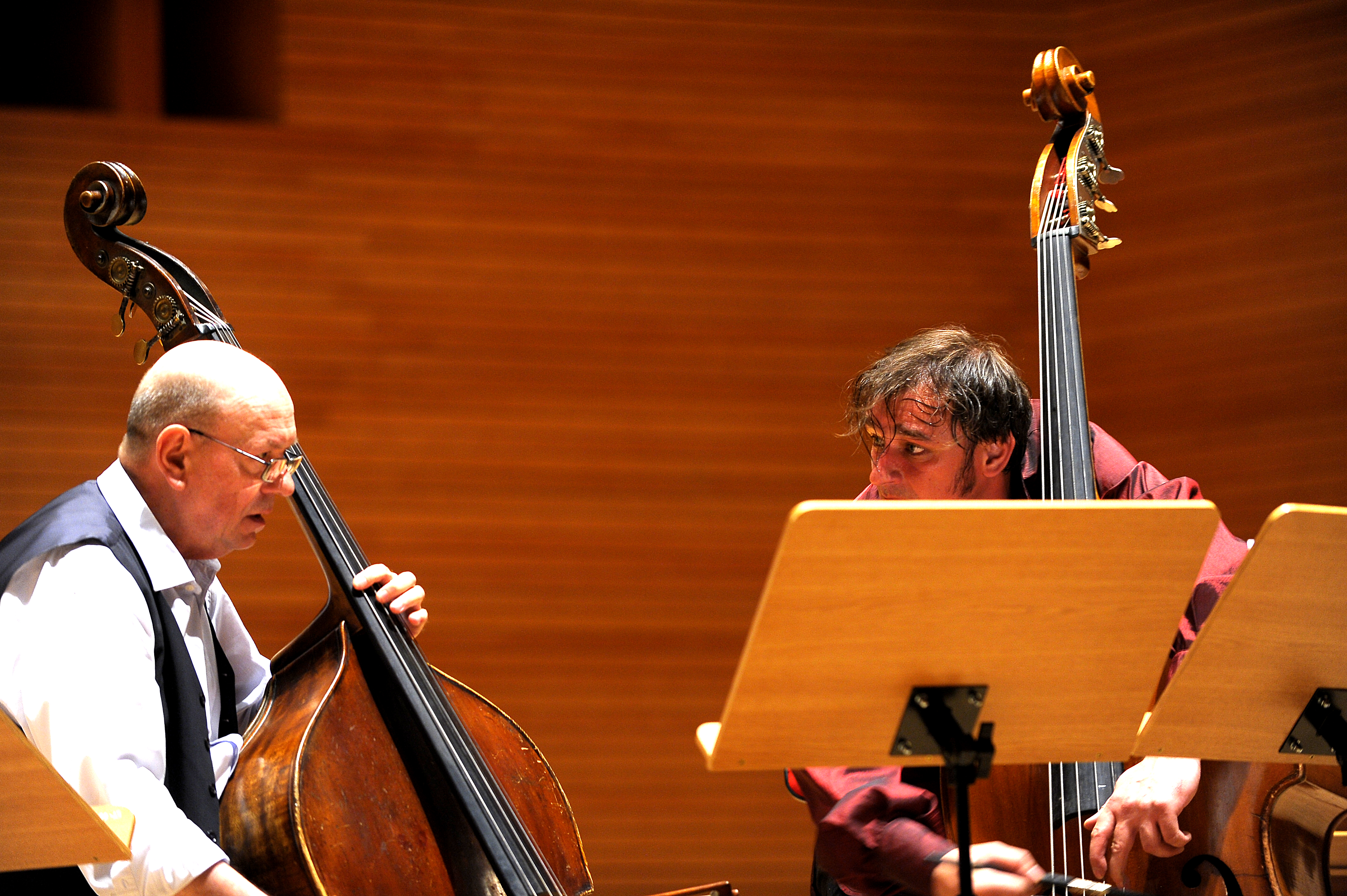
When he played, I had the impression that he was growing together with the double bass. He did not so much hold the instrument as nestle into it and merge with it into a single organism. His body moved in a shared rhythm with the sound. He played as he spoke: calmly, consciously and with conviction. I had the impression that before the next sound was heard, it had already been inwardly considered and accepted by him.
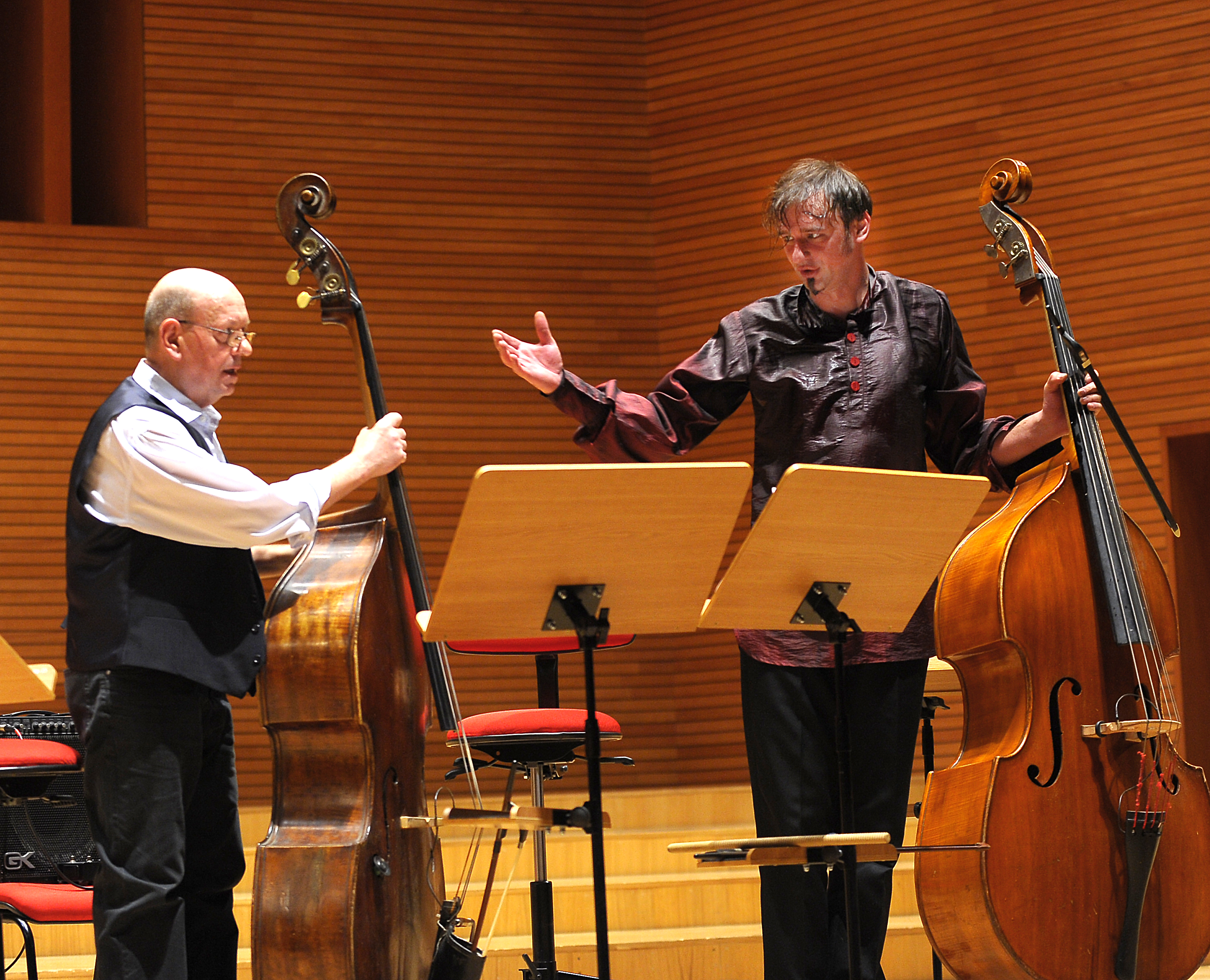
He often repeated that for a bassist the most important thing is understanding harmony. He did not say this like a teacher delivering a theory, but like a person who lived that principle himself every day.
He could be sceptical toward musical novelties, but he never closed himself to them. On the contrary: he listened to them with enormous attention. The strangest sounds he received with childlike amazement, as if hearing them for the first time. The more the music surprised him, the greater his concentration became.
He was a deeply believing man. At the same time, with immense curiosity about people, he traversed nightclubs, small venues and places where conversations mattered most. I never experienced this as a contradiction. On the contrary, it seemed to me that it came from the same openness to the world and to another human being.
What moved me especially was the gratitude with which he remembered my Parents. Many times he returned to the story of the exam he had passed many years earlier with my Father. He spoke about it with genuine emotion. That was exactly how he was: loyal to people and faithful to the memory of those who had played an important role in his life.
We played together in public only once.
During the 65th anniversary of the Mieczysław Karłowicz State Music School in Katowice, we performed Witold Szalonek’s 1+1+1+1 in the concert hall of the Academy of Music. A recording of that concert has survived in two parts. Today, for me, it has a value far greater than an ordinary record of a performance.
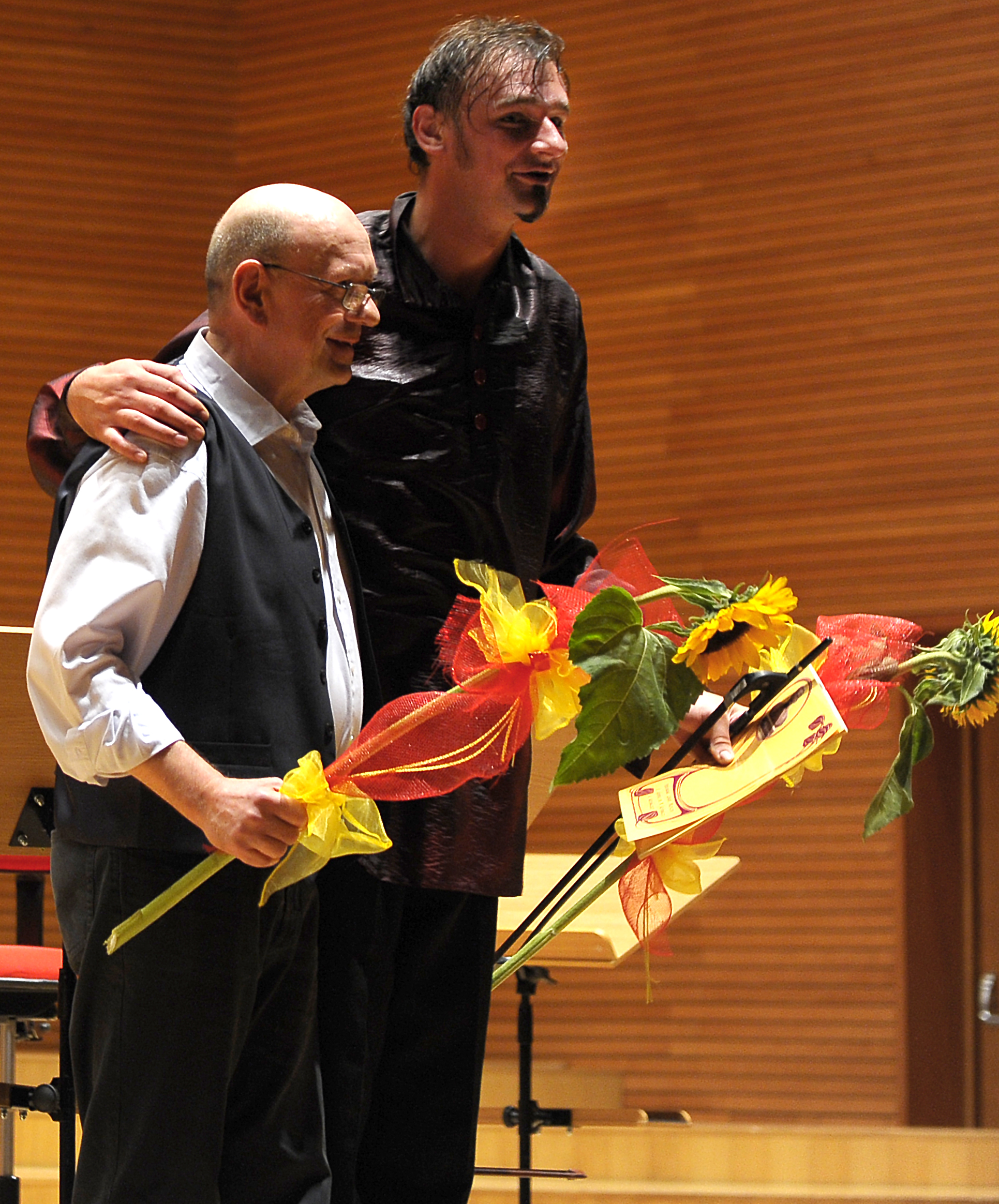
Two days later Zbyszek suffered a heart attack and underwent surgery at the Silesian Centre for Heart Diseases in Ochojec. At that moment none of us suspected how fragile our plans could be.
We still spoke about further collaboration. We dreamed of developing our improvisations, of making recordings together, of a project for two double basses. Those plans could no longer be realized.
Today, when I return to those recordings, of course I hear the music. But even more, I hear the human being.
A man of extraordinary modesty, attentiveness and goodness. Music was for him something much more than a profession. It was a way of listening to the world and to people.
That is the Zbyszek I have kept in memory.